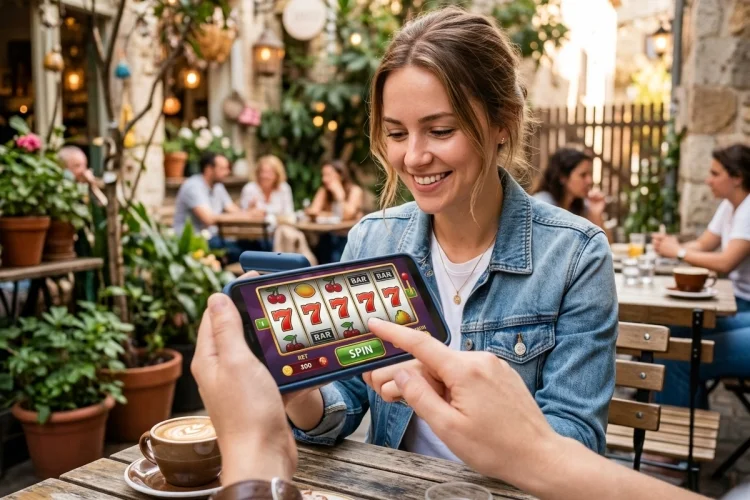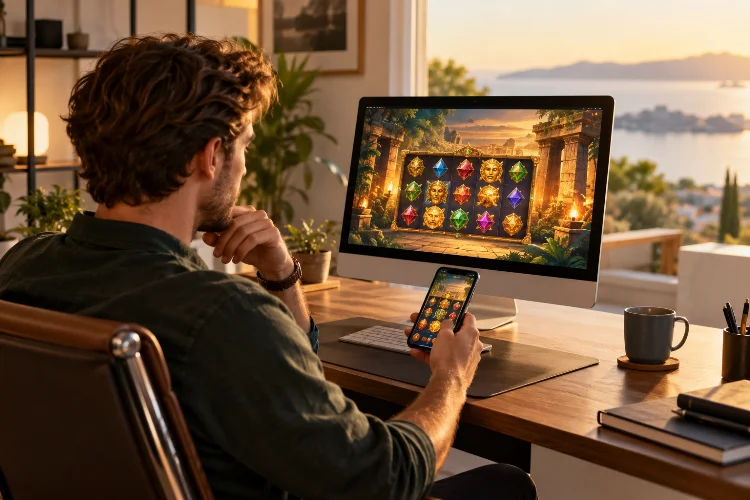
A slot can feel surprisingly different when you move from a 27-inch monitor to a phone screen. The reels, payouts, and bonus rules may stay the same, but controls, visibility, loading speed, and overall comfort can change significantly.
So, Are Slot Games Better on Mobile or Desktop? There is no universal winner. Mobile is hard to beat for convenience and touchscreen play, while desktop usually offers more screen space and stronger hardware.
The better option depends on the game itself, your device, connection quality, and how you prefer to play.
Mobile Wins When Convenience Matters Most
The biggest advantage of mobile slots is obvious: portability.
A smartphone lets you access compatible games without sitting at a desk.
Modern responsive web design allows websites and browser applications to adjust their layouts for different screen sizes and resolutions, which is why many current games can work across phones, tablets, laptops, and desktops.
Good mobile designs reorganize buttons, menus, and game information instead of simply shrinking a desktop interface.
That makes quick navigation much easier than it was during the early mobile-web era.
Touch controls can also feel natural. Tapping the spin button or selecting an item during a pick-style bonus is often more direct than moving a mouse pointer.
The downside is that portability can encourage shorter, more frequent sessions. Keeping personal limits in mind remains useful regardless of which device you choose.
Desktop Offers More Screen Space
Desktop has a clear physical advantage: screen size.
Modern slots can contain six or more reels, jackpot meters, multipliers, side panels, bonus counters, and detailed animations. Fitting all of that onto a phone requires developers to reorganize or shrink certain elements.
Responsive design helps, but a wide desktop monitor can still display more information at once. MDN notes that responsive layouts need to adapt to varying screen widths and resolutions because a layout that works well on desktop may not translate directly to a narrow mobile display.
That extra space becomes especially useful with complex Megaways, cluster-pay, or multi-grid titles.
Paytables and feature explanations can also be easier to read.
On a phone, you may need several taps to move between help screens. Desktop interfaces can often present more information without covering the reels.
For detailed game exploration, desktop generally feels less cramped.
Which Device Gives Better Graphics?
Desktop computers usually have more room for powerful CPUs and GPUs.
That can matter when a browser game uses high-resolution textures, animated backgrounds, lighting effects, or complex bonus sequences.
However, modern phones are surprisingly capable.
WebGL allows browsers across different devices to render advanced graphics, while developers can adapt texture sizes and rendering resolution to suit mobile hardware.
MDN specifically recommends techniques such as controlling GPU memory use and rendering to smaller buffers when necessary.
This means a properly optimized slot does not need to look bad on mobile.
The difference becomes more noticeable when the game is poorly optimized or when you compare an older budget phone with a modern desktop PC.
A lightweight 5×3 slot may look equally smooth on both. A feature-heavy game with multiple animated grids can expose the hardware gap much more quickly.
So desktop generally has more performance headroom, but mobile optimization can narrow that difference considerbly.
Does Mobile or Desktop Load Games Faster?
There is no automatic winner.
Loading performance depends on device processing power, connection quality, game-file size, server response, caching, and how efficiently the developer built the game.
MDN describes web performance as a combination of loading speed, responsiveness, smooth animation, and the time needed for content to become interactive.
Desktop systems often have faster processors and more memory, which can help with large JavaScript workloads and game assets.
Mobile devices have another advantage: developers can serve smaller images and layouts suited to narrow screens rather than downloading unnecessarily large desktop resources. Responsive optimization can therefore reduce bandwidth requirements.
The network can easily reverse either advantage.
A flagship desktop on poor Wi-Fi may load slower than a mid-range phone using a strong connection.
Rather than assuming one platform is faster, compare the same game under similar network conditions.
Touchscreen vs Mouse: Which Controls Feel Better?
This largely comes down to game design.
Mobile interfaces work especially well when controls are large and simple. Spin, autoplay settings, paytable buttons, and bonus selections can all be handled with taps.
A mouse provides greater precision.
That may be useful when the game contains small information icons, detailed menus, or several controls positioned closely together.
Desktop users also benefit from a stable physical setup. Accidental taps are less common, and it is easier to hover around menus without covering part of the screen with your hand.
On the other hand, well-designed mobile interfaces are built specifically around fingers.
Mobile accessibility guidance recommends ensuring layouts and controls adapt appropriately to smaller screens rather than forcing users to interact with desktop-sized elements.
Neither input method is inherently better. The quality of the interface matters more.
Is RTP Different on Mobile and Desktop?
Normally, the device itself should not make a slot mathematically better.
If a casino serves the same certified game configuration on mobile and desktop, changing from one device to another does not magically improve its theoretical payout rate.
RTP is a long-term theoretical percentage rather than a prediction for an individual session.
The UK Gambling Commission explains that random games achieve their target RTP statistically over a large number of plays and that previous wins or losses do not change the odds of the next result.
However, you should still check the game information.
Some online slots can exist in multiple RTP configurations depending on the operator or market. What matters is the specific version being offered, not whether the screen has Android, iOS, Windows, or macOS behind it.
The same principle applies to volatility.
Hardware changes presentation and performance, not the underlying probability model of an identical game version.
Mobile Can Struggle More With Heat and Battery
A desktop computer has one advantage phones cannot easily copy: much more space for cooling and constant power.
Long gaming sessions can make a smartphone warm, particularly when the game uses heavy animations at high screen brightness.
Once mobile hardware is under sustained load, the operating system may manage resources more aggressively.
Battery drain is another consideration.
A slot running continuous graphics, sound, network communication, and screen animation can use more power than ordinary web browsing.
Desktop users usually do not think about battery life unless they are on a laptop.
Mobile users might need to balance brightness, connection type, and session length.
Charging while running a graphically intensive game may also generate additional heat on some devices.
For short sessions this is rarely dramatic, but for longer play desktop usually provides a more consistant environment.
Desktop Is Better for Complex Games, Mobile for Simpler Play
The type of slot can influence which device feels best.
A simple classic slot with three or five reels fits naturally onto almost any modern phone.
A huge grid with several meters, cascading wins, multipliers, side features, and changing reel dimensions benefits more from a larger display.
This does not mean complicated slots are bad on mobile.
Responsive interfaces can work extremely well. The practical difference is how much information you can absorb without opening extra menus or squinting at small counters.
If you mostly play straightforward games, mobile’s convenience may outweigh almost every desktop advantage.
If you spend time studying feature rules and detailed bonus screens, desktop can feel more confortable.
Are Slot Games Better on Mobile or Desktop? Mobile wins for convenience, portability, and touchscreen controls, while desktop generally provides more screen space, stronger hardware, and easier viewing of complex games.
Neither device automatically improves RTP or winning chances. Try the same game on both platforms, compare usability and performance, and choose the setup that feels clearer and more comfortable for you.