
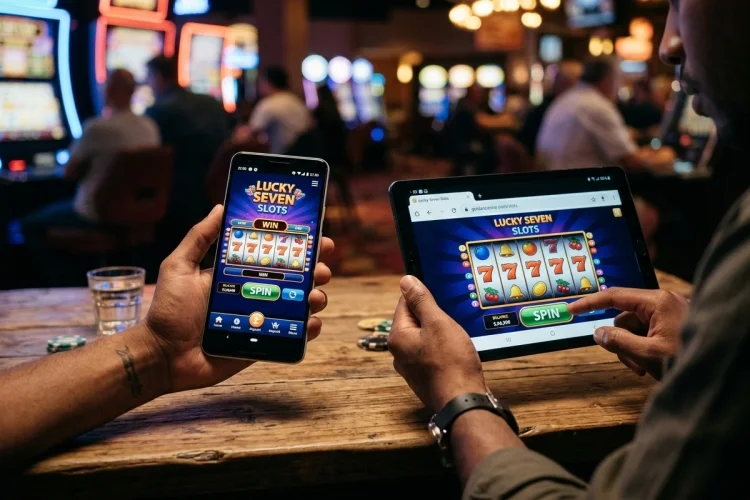
Playing slots on an Android phone no longer means choosing one specific format.
Depending on the operator and your location, you may be able to install a dedicated app, play directly through a mobile browser, or even save a web version to your home screen.
This Android Slots Guide explains how those options differ without assuming that one is automatically better. Apps can provide quick access and a dedicated interface, while browser play avoids another full installation.
Before choosing, it helps to compare availability, security, storage, updates, compatibility, and permissions.
What Is an Android Slot App?
An Android slot app is software installed directly on your phone or tablet.
Depending on the service and jurisdiction, it may contain casino games inside the app or act as a mobile client that connects to an operator’s online platform.
The main advantage is convenience. Once installed, the icon sits alongside your other Android apps, so you do not need to open a browser and navigate back to the website every time.
A properly designed app may also integrate mobile features such as biometric login, notifications, full-screen layouts, or faster access to saved settings.
However, availability is not universal.
Google Play allows real-money gambling apps only under specific requirements, including appropriate licensing, age restrictions, geographic controls, and approval for supported countries or regions. Approved gambling apps must also be free to download.
That means an app visible to somebody in one country may not appear in another.
How Browser-Based Android Slots Work
Browser play skips the dedicated casino application.
Instead, you open a compatible mobile browser, visit the operator’s website, sign in, and launch the game directly from the page.
Modern browser games are generally designed around responsive interfaces, meaning menus and reels can adapt to a smaller screen.
From the user’s perspective, the experience can feel surprisingly close to an app.
The major advantage is that there is nothing substantial to install. You may still store cookies and site data, but you avoid adding another complete application to the device.
This is useful on phones with limited internal storage.
Browser access also means updates to the gaming platform are usually handled on the website side. You generally do not need to visit an app store every time the operator changes part of its interface.
App vs Browser Performance
Performance depends more on the quality of the software, phone hardware, and internet connection than simply on whether you use an app or browser.
A well-optimized Android app may feel smooth because it was designed specifically for the operating system.
However, modern browsers can also handle animated interfaces, audio, and interactive game content effectively.
For casual play, the practical difference may be small.
Older or entry-level phones can be more complicated. Having several apps running in the background may consume memory, while browser sessions with many open tabs can create their own performance problems.
Try closing unnecessary programs before blaming the game itself.
Temperature can matter too. Long sessions involving animated graphics can make some phones warmer and reduce performance as the device manages heat.
The important lesson is that “app” does not automatically mean faster.
Google Play Availability Can Depend on Your Location
One common question is why a gambling app appears in searches online but not in Google Play.
Regional policy is one possible reason.
Google currently allows qualifying real-money gambling apps only in supported jurisdictions and requires developers to hold appropriate licences for each location where their app is distributed. Apps must also block users from unauthorized geographic areas.
This creates a noticeable difference between apps and websites.
A browser may technically reach a website from almost anywhere, but the operator can still restrict registration, deposits, or gameplay based on local regulations and licensing.
Availability should therefore never be treated as evidence that a service is legal in every location.
Check both the operator’s licence information and the rules that apply where you are physically located.
Security Matters More When Installing an App
Installing software adds another security consideration.
Google Play Protect scans apps from Google Play before download and can also check apps obtained from other sources for potentially harmful behaviour. It may warn about, disable, or remove software identified as dangerous.
For that reason, the safest app route is generally the operator’s verified store listing or another installation method explicitly documented by the licensed service.
Be cautious with random APK download pages.
A file using a familiar casino name does not automatically belong to the real operator. Fake APK files can be used for malware, credential theft, or financial scams.
Android allows software from outside Google Play under certain conditions, but alternative installation creates an extra verification burden for the user.
Do not turn off security protections just because an unfamiliar website asks you to.
That is a particularly bad trade-off for a platform where payment and identity information may be involved.
Browser Play Has Different Security Risks
The browser option avoids installing a full APK, but that does not eliminate security concerns.
Phishing websites can imitate legitimate gambling platforms and attempt to capture usernames, passwords, or payment details.
Chrome’s Safe Browsing system checks for known phishing, malware, deceptive content, and dangerous downloads and can display a warning when it identifies a risky website.
Keep those warnings enabled.
Also check the domain carefully before signing in. A single changed letter in a website name can lead to an entirely different destination.
Avoid following questionable links from unsolicited messages.
For frequently used sites, a saved bookmark or verified home-screen shortcut can reduce the chance of repeatedly searching and clicking a fake result.
You Can Make a Website Feel More Like an App
App and browser are no longer always completely seperate categories.
Chrome on Android supports installable web apps and website shortcuts. An eligible web application can be installed from Chrome and accessed from the launcher or home screen, while ordinary websites can also be saved as shortcuts.
This can be a practical middle ground.
You get an icon that provides quick access without necessarily installing a traditional native Android package.
Some web apps can even support features such as notifications or limited offline functionality, although an online casino naturally still requires a network connection for actual server-based gameplay.
The exact option displayed in Chrome can vary depending on how the website is built.
You might see Install app or an option to create a shortcut.
Compare Storage and Update Requirements
Native apps occupy device storage.
The installation file itself takes space, and additional cache or game resources can increase that footprint over time.
This may not matter on a phone with plenty of free storage, but it can become noticeable on budget devices.
Browser play typically has a lighter footprint because the game content is loaded through the browser. Websites can still save cookies, cached files, and other local data, but clearing those resources is normally easier than managing several large gaming apps.
Updates are another consideration.
Apps can require new versions when features or security components change.
Browser platforms tend to update server-side, so the latest interface appears the next time you open the site.
Keeping your browser updated remains important. Google states that current Chrome for Android supports Android 10 and later and receives security updates through the browser update process.
Review Permissions Before Saying Yes
Apps and websites can both request permissions.
An app might ask for notifications, biometric features, storage access, or location depending on what it offers.
Websites can also request access to location, camera, microphone, notifications, and other device capabilities through the browser.
Chrome allows Android users to grant, deny, or limit those permissions on a site-by-site basis.
Do not automatically tap “Allow” every time a prompt appears.
Ask whether the feature genuinely needs that permision.
Location may be necessary for licensed gambling services that must verify where a user is playing. Microphone access, on the other hand, would be unusual for an ordinary slot interface unless a specific feature clearly explains why it is needed.
Review permissions occasionally rather than forgetting about them forever.
Which Android Option Makes More Sense?
There is no universal winner.
A dedicated app can make sense if you regularly use one licensed platform, want quick access, and have enough phone storage.
Browser play is attractive if you prefer fewer installations, switch between services, or only use the platform occasionally.
A web-app shortcut can sit somewhere in between.
Whatever option you choose, pay more attention to operator legitimacy, security, compatibility, and licensing than cosmetic differences between an icon and a browser tab.
A polished interface cannot compensate for an unverified service.
This Android Slots Guide shows that apps and browsers can both offer convenient mobile access, but they involve different trade-offs. Apps provide dedicated access, while browser play reduces installation and storage demands.
Before using either option, verify regional availability, security, permissions, and device compatibility. Try the official interface first and choose the format that works comfortably on your Android device.